
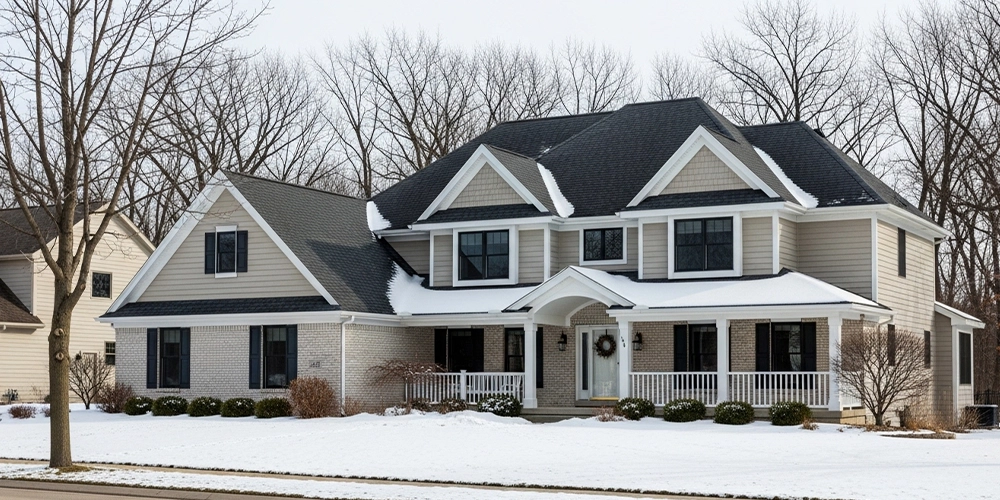
The best roofing material for Wisconsin weather depends on the roof type, your budget, and how long you plan to stay in the home. For most Wisconsin homeowners, architectural asphalt shingles are usually the best all-around choice because they balance cost, durability, repairability, and appearance. If you want the premium option, metal roofing is one of the strongest choices for heavy snow, wind, and long service life. For low-slope commercial roofs, EPDM and TPO are usually the materials property owners compare most seriously.
That answer is not just about the material itself. In Wisconsin, roofing performance is also shaped by ice dams, snow load, freeze-thaw cycles, hail, and attic ventilation. Wisconsin code commentary notes that cold-side attic venting helps keep the roof cooler and reduces ice-dam formation, and Building Science also says roof ventilation in cold climates is meant to maintain a cold roof temperature to control ice dams. In other words, even a good roofing material can underperform if the roof system is badly vented or poorly detailed.
What Wisconsin Weather Does to a Roof
Wisconsin is hard on roofs for one main reason: the weather changes keep coming. Snow sits. Ice forms. Then things thaw. Then they freeze again. That cycle can stress shingles, flashing, roof edges, and drainage details. Wisconsin Extension specifically warns that roofs can be damaged by ice damming, hail, and heavy snow, which is exactly why material choice and system design matter more here than they do in milder climates.
That is also why the “best roofing material” question should never be answered by material alone. A Wisconsin roof needs the right underlayment, proper attic ventilation, and good roof-edge protection. Without those things, even an expensive roof can have problems.
Best Overall for Most Wisconsin Homes: Architectural Asphalt Shingles
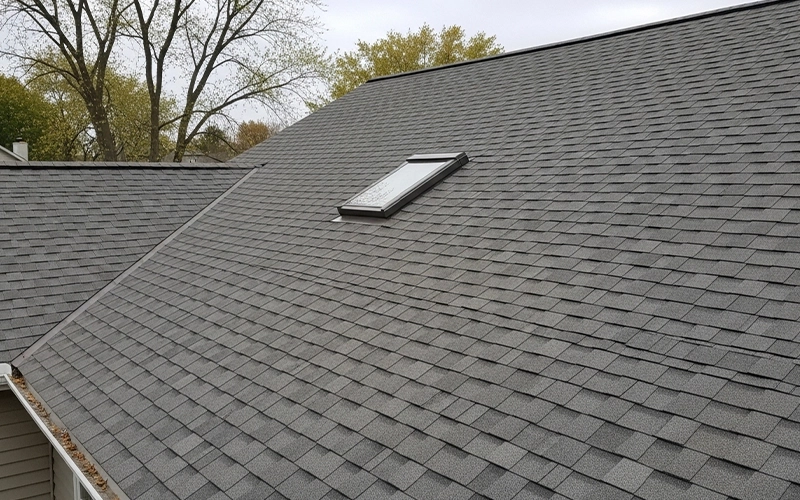
For most homes in Wisconsin, architectural asphalt shingles are still the best overall choice. They are widely used, easier to repair than many premium systems, available in many styles, and generally offer a strong balance between price and performance. Owens Corning says asphalt shingles usually last 20 to 30 years, with architectural shingles generally lasting longer than standard 3-tab products. GAF gives the same general range for asphalt shingles.
That matters because in Wisconsin, a roof is not just about surviving one storm. It has to handle years of winter exposure, spring rain, summer storms, and fall temperature swings. Architectural shingles make sense for many homeowners because they are practical, proven, and easier on the budget than metal or specialty systems.
If you go with asphalt in Wisconsin, it is worth looking at impact-resistant shingles, especially if your area sees hail. Owens Corning explains that Class 4 is one of the highest impact-resistance ratings available for shingles, and GAF notes that Class 4 products carry the highest rating based on UL 2218 impact testing and may help protect against hail. That does not make a roof hail-proof, but it can make the system more resilient.
Best Premium Option for Wisconsin: Metal Roofing
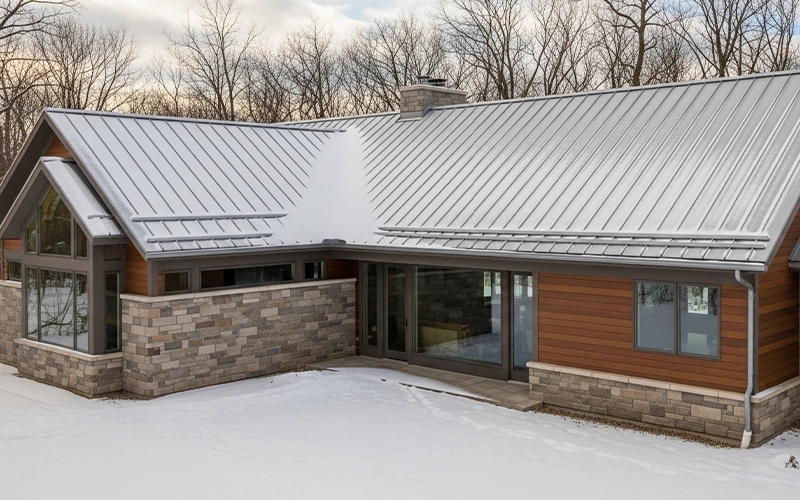
If budget is not the main deciding factor, metal roofing is one of the best materials for Wisconsin weather. State Farm notes that metal roofs are very resilient against strong winds and heavy snow, which is a big deal in a state where winter roof stress is real. Metal also tends to last much longer than asphalt, often in the 40 to 80 year range depending on the system and maintenance.
The big advantage of metal in Wisconsin is not just longevity. It is also the way metal handles snow. Snow tends to release more easily from metal than from rougher roofing surfaces, which can help reduce lingering snow load. That said, metal roofs need the right details too. In some situations, snow guards or other controls are needed so snow does not shed too aggressively over entries or walkways.
So, if you want the short version: metal is usually the best premium roofing material for Wisconsin weather, especially for homeowners who want a longer-life roof and are comfortable with the higher upfront cost.
Best Choice for Low-slope and Commercial Roofs: EPDM or TPO
If the roof is flat or low slope, the material conversation changes. In that case, the best roofing material is usually not shingles or standing seam metal. It is usually EPDM or TPO, depending on the building and the owner’s goals.
EPDM is especially worth a close look in Wisconsin because Carlisle says black EPDM can help reduce heating costs in northern climates, while the product also has a long performance track record. Carlisle also notes that black EPDM has been used for more than 50 years, and separate Carlisle material says EPDM is known for durability and often exceeds 30 years with proper maintenance. That makes EPDM a very practical option for colder, heating-dominant regions.
TPO is also a strong commercial option and is commonly expected to last around 20 to 30 years. It is often chosen when owners want a modern membrane system with dependable performance and a cleaner surface profile. GAF’s current commercial guidance puts TPO in that 20-to-30-year range.
For many Wisconsin commercial properties, the real answer is this: EPDM is often a very smart choice in colder climates, while TPO is also a strong contender depending on the building, the budget, and the roof design.
What Matters More than the Material
This is the part a lot of homeowners miss.
The best roofing material can still fail early if the roof system is wrong. Wisconsin code commentary says attic venting helps keep roofs cooler and reduces ice dams. Building Science makes the same point: in cold climates, ventilation is there to help maintain a cold roof and control ice dams. That means insulation, ventilation, flashing, and underlayment matter almost as much as the top roofing layer.
So if you are trying to choose the best roofing material for Wisconsin weather, the better question is really: What roofing system makes sense for this specific house or building in this climate? On many sloped homes, that answer is architectural shingles. On higher-end homes, it may be metal. On low-slope commercial roofs, it is often EPDM or TPO.
The Bottom Line
For most Wisconsin homes, architectural asphalt shingles are usually the most practical choice because they offer a strong balance of cost, durability, and everyday performance. If you want a more premium option, metal roofing stands out for its long lifespan and strong performance in snow and harsh weather. For low-slope commercial roofs, EPDM or TPO are often the better fit, depending on the building and the roofing goals. If hail resistance is a bigger concern, Class 4 impact-resistant shingles are worth a closer look. In the end, the best roofing material depends on the property itself, but in Wisconsin, roofs tend to perform best when the full system is durable, well vented, and built to handle snow, ice, and storms.
Need help choosing the right roof for your Wisconsin property? Contact Apexium Roofing for an inspection and get a clear recommendation based on your home, your budget, and your weather exposure.