
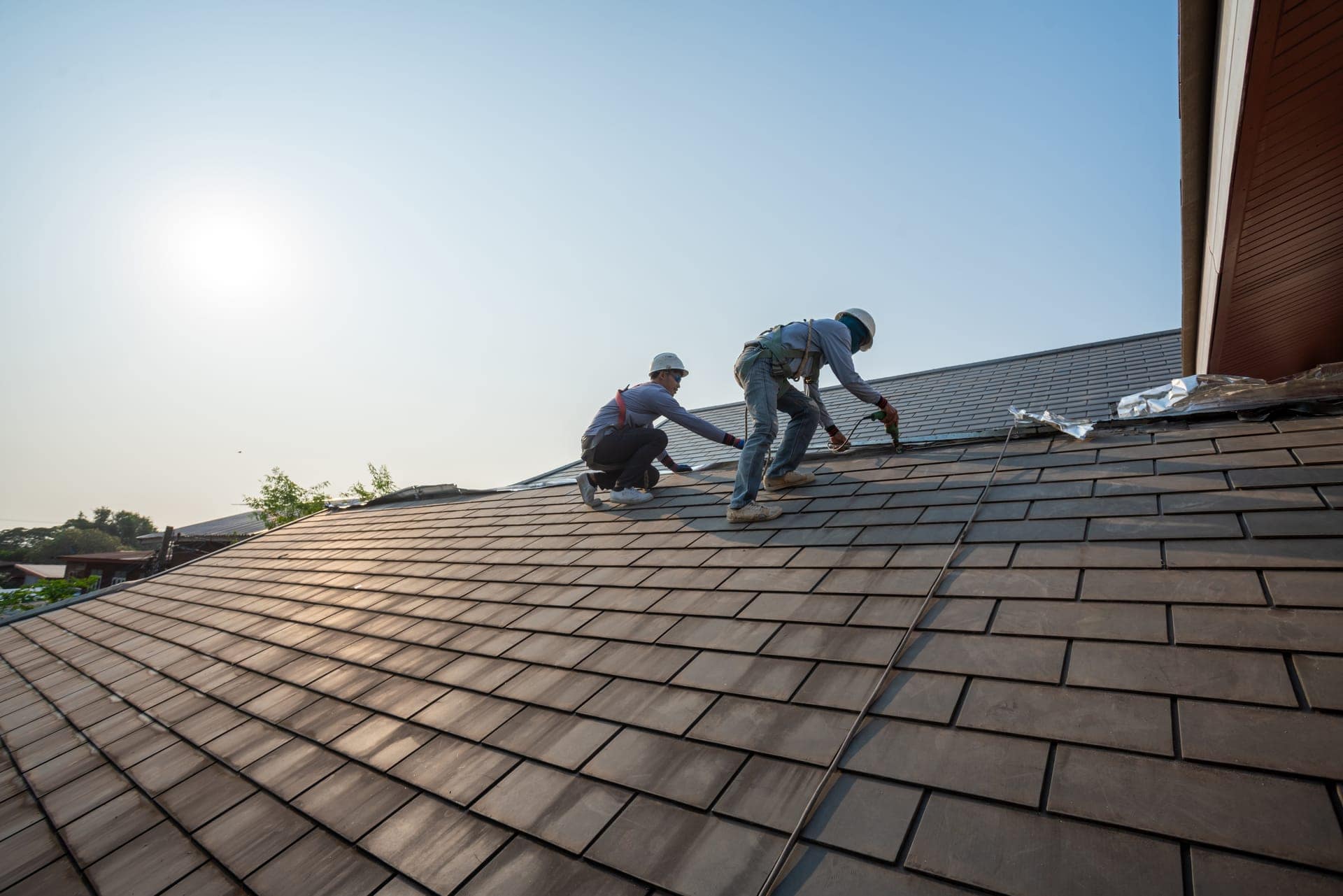
Your roof replacement day will be louder, faster, and more disruptive than most homeowners expect. That's not a complaint. It means the crew is working efficiently. Here's what to prepare for on a residential roof installation.
Morning: 7–7:30 AM Arrival
The materials truck usually arrives first if shingles weren't pre-staged the day before. A delivery truck with a conveyor or crane arm will load bundles directly onto your roof. This is normal and the fastest method.
The crew arrives behind it. After a brief walkthrough with the foreman (confirming material color, any access concerns, flashing specifications), tear-off begins. Expect loud banging. This is normal and unavoidable.
Mid-Morning: Tear-Off and Debris
Shingle debris comes off the roof into either a dump trailer in your driveway or a ground tarp. Apexium uses a catch-all tarp system on driveways and landscaping we're protecting. Some debris will hit the ground, expect it.
If the crew finds rotted decking during tear-off, the foreman will walk you through it before replacing it. We document every board with a photo and get your sign-off before adding it to the invoice. This is the one mid-project decision you'll likely face.
Afternoon: Installation
Underlayment, ice and water shield, and shingle installation happen fast on a clear afternoon. A 5-person crew can sheet 40–50 squares of shingles in an afternoon on a walkable-pitch roof.
You don't need to be home during this phase. Most homeowners leave and return to a finished roof.
Late Afternoon: Cleanup
Cleanup is a meaningful part of our job. Magnetic sweeps of the driveway and yard, collection of all debris, gutter clearing of granules and shingle tabs. By the time the crew leaves, the only evidence of the project should be a new roof.
What You'll Receive When We're Done
Written warranty documentation, permit record (if applicable), manufacturer warranty registration, and a final walkthrough with photos of all flashing details if requested.
Typically between 7 and 7:30 AM, with the materials truck often arriving first. Early starts are deliberate, because the goal is to get the roof open, dried in and closed within the daylight window.
Loud, and the vibration carries through the house. Tear-off is the worst of it and usually happens in the first few hours. If you work from home or have a napping child, plan around that morning rather than the whole job.
Only if the attic needs inspecting, which takes about ten minutes and happens before work starts. Otherwise everything is done from outside, and we do not need bathroom or kitchen access.
Take down anything on a wall that shares structure with the roof, particularly on upper floors. Tear-off vibration knocks frames crooked and occasionally off the wall. Shelved items in the garage are the other common casualty.
We tarp beds and shrubs, put plywood under the dumpster on the driveway, and stage away from anything fragile. Point out what matters at the walkthrough, because we cannot tell a prized plant from a volunteer.
We run a rolling magnet over the lawn, beds, driveway and the street apron at the end of every day, not only at the end of the job. If you find one afterwards, call us and we come back out.
Have a specific question about your Milwaukee roof? We answer directly.