
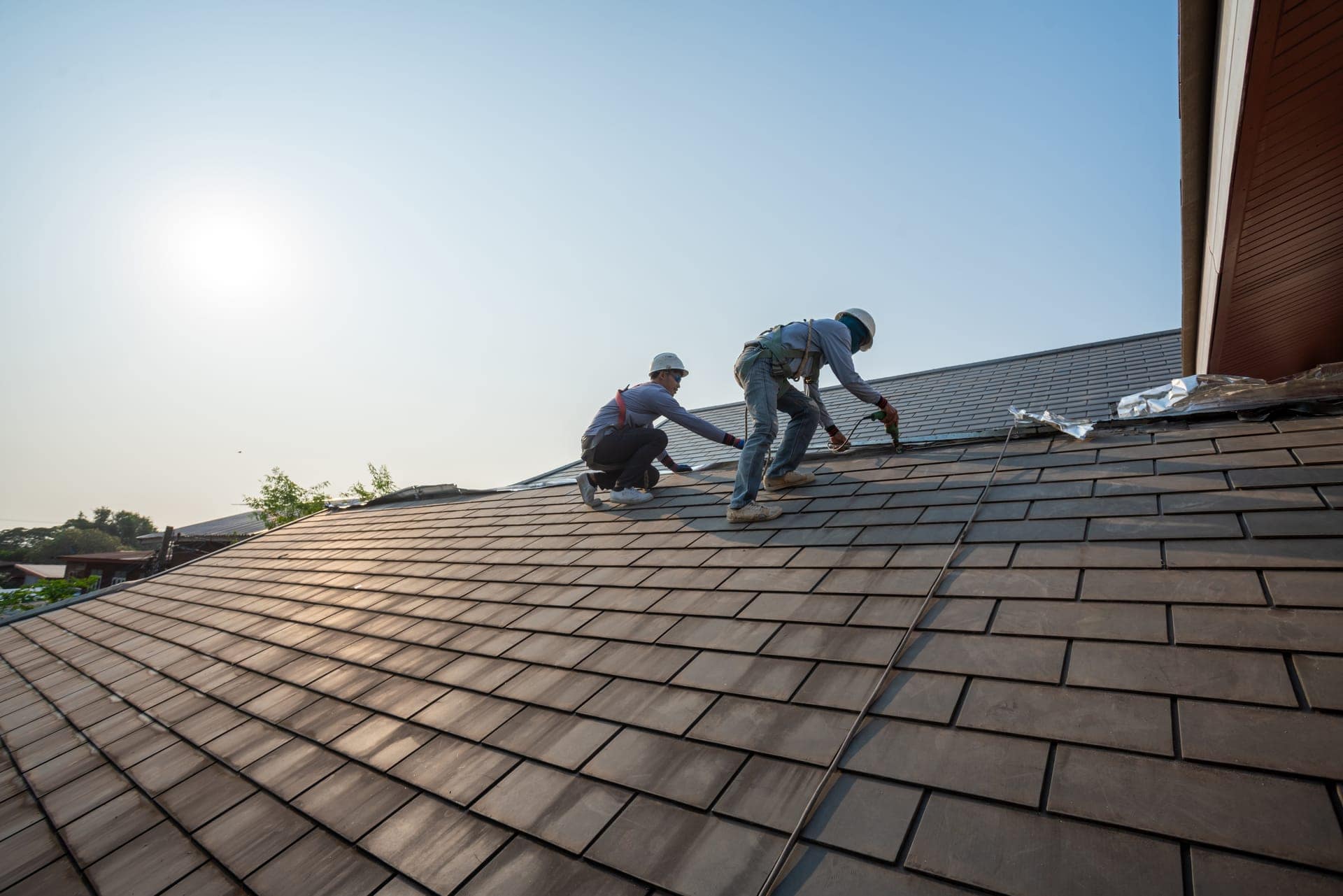
Milwaukee sees hailstorms every spring, and homeowners are frequently unsure whether their roof was damaged or just dirty. Here's how we assess hail damage during storm damage repair on a home, and what documentation a successful insurance claim needs.
What Hail Damage Actually Looks Like
On asphalt shingles, hail damage appears as soft, circular bruising, impact points where the hail knocked granules loose and dented the mat underneath. It's not always visible from the ground. A proper hail damage inspection requires getting on the roof and running your hand across the shingle surface to feel for soft spots.
Functional damage, meaning damage that will shorten the roof's lifespan or allow water infiltration, is what insurance pays for. Cosmetic damage (surface marks with no mat penetration) typically isn't covered.
What We Document on Every Milwaukee Inspection
- Hail strike density per 10-square-foot test square
- Direction of storm travel (confirmed by strike pattern)
- Cap flashing strikes (unambiguous damage reference)
- Valley flashing marks
- Age of existing shingles vs. strike evidence
The Insurance Adjuster Visit
Most Wisconsin homeowner policies require a field adjuster inspection before approving a claim. Apexium can be present for your adjuster visit. We've done this hundreds of times and understand how to walk adjusters through the damage evidence. This isn't adversarial; adjusters want clear documentation and we provide it.
After the Storm
Milwaukee hailstorms typically produce a wave of contractors from out of state, many without Wisconsin licenses, working neighborhoods door-to-door in the days after a storm. Wait for a contractor you've verified before filing a claim. An inflated or inaccurate claim creates problems for your policy, not just the insurance company.
Contact Apexium for a free post-storm inspection. We'll tell you honestly if there's a legitimate claim to file.
Usually you cannot tell from the ground, which is the core problem. Hail bruising shows as soft, circular impact points with granule loss in a random scatter pattern. It is visible on the roof and often invisible from the driveway, which is why whole blocks qualify while only the homeowners who had someone look actually file.
Roughly one inch is the common threshold for asphalt shingles, though older or already-weathered roofs take damage from smaller stones. Wind driving the hail sideways matters as much as diameter, which is why one elevation is often hit while others are clean.
No. Adjusters use test squares to assess hits per 100 square feet. Below the threshold it is a repair. Above it, the slope or the roof qualifies. Any contractor telling you every hail claim is a full replacement is not reading the roof.
Wisconsin policies generally allow a limited window, often one to two years, and it varies by carrier. The clock starts at the date of loss, not the date you noticed the ceiling stain, so getting an inspection soon after a known event is always stronger.
Yes. A claim that gets denied still sits on your record. A free inspection tells you whether there is a claim worth making, and we will tell you honestly when what we find is wear rather than storm damage.
On metal it shows as dents that may be cosmetic rather than functional. On membrane it shows as fractures in the surface with crushed insulation underneath, which is frequently invisible from above and needs core samples to prove.
Have a specific question about your Milwaukee roof? We answer directly.