
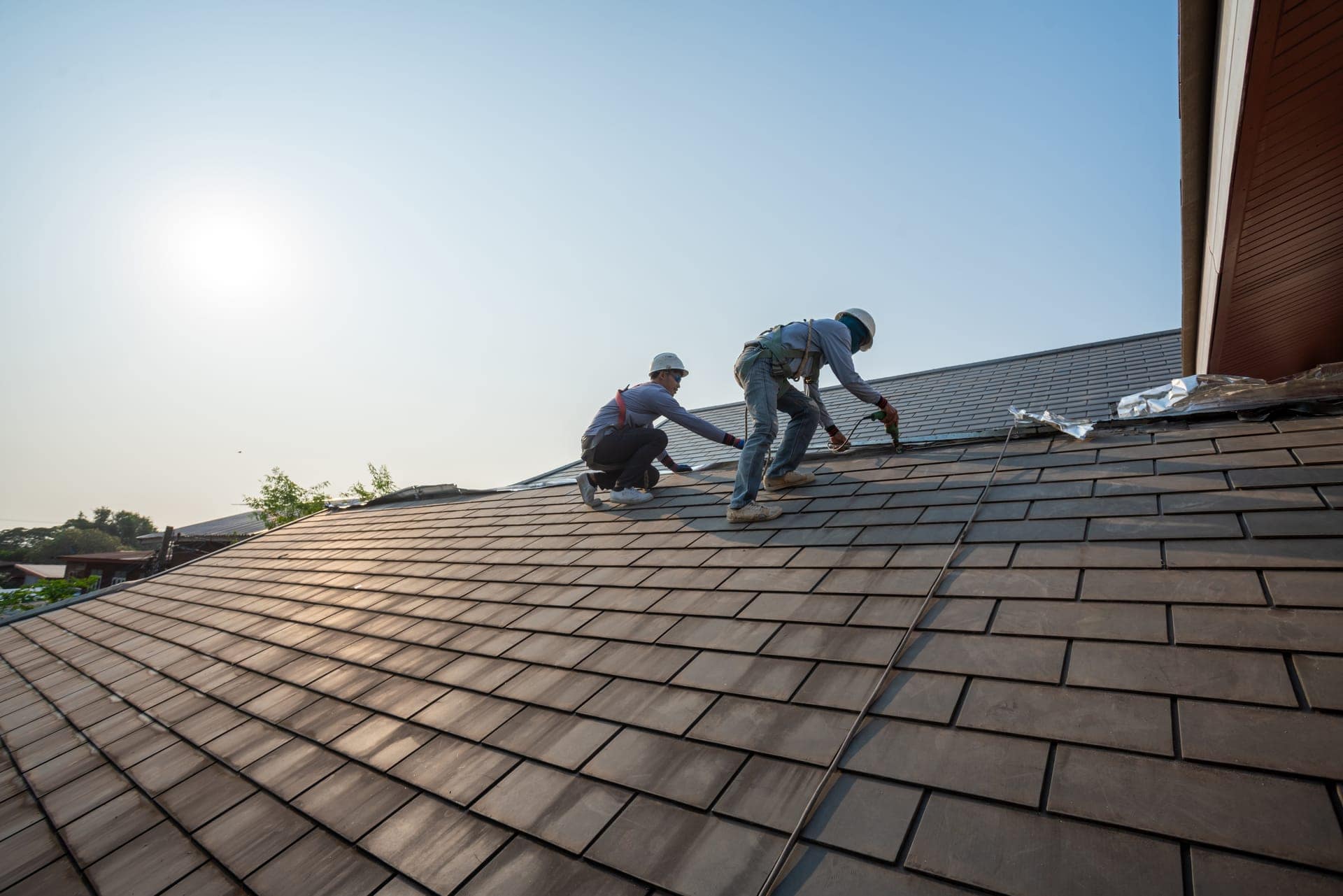
Milwaukee homes spend six months a year dealing with conditions that destroy average roofing materials, freeze-thaw cycles, ice dam formation, heavy snow loads, and hail season every spring. Choosing the right material isn't aesthetic preference; it's a structural decision.
Asphalt Shingles
Architectural asphalt shingles remain the most common choice in Milwaukee County for three reasons: upfront cost, ease of installation, and material availability. A full replacement on a 2,000 sq. ft. Milwaukee home typically runs $9,000–$14,000 installed. Lifespan in Wisconsin conditions: 20–25 years with proper ventilation.
Impact-resistant (Class 4) shingles add roughly $1,500–$2,500 to the project cost but qualify for homeowner's insurance discounts in Wisconsin, often recouping their premium within 3–5 years.
Metal Roofing
Standing seam metal runs $18,000–$32,000 for a Milwaukee residential replacement. That's real money. The case for it: 50+ year lifespan, superior snow shedding, zero ice dam formation on properly installed systems, and virtually no maintenance. On a cost-per-year basis, quality standing seam often beats asphalt over a 40-year horizon.
Exposed-fastener metal panels are cheaper ($12,000–$18,000) but require screw replacement every 15–20 years and are more susceptible to ice dam issues around the eaves.
The Bottom Line for Milwaukee
If you're planning to stay in the house 20+ years and have the budget, standing seam metal is the superior long-term choice for Wisconsin's climate. If you need a quality roof at a reasonable price and plan to sell within 15 years, architectural asphalt shingles with Class 4 impact resistance are the practical answer.
Contact Apexium Roofing for a free estimate. We'll walk you through material options specific to your roof pitch, attic ventilation, and budget.
It depends how long you are staying. Standing seam runs roughly double asphalt up front but lasts 50-plus years against 20 to 25, sheds snow better, and does not form ice dams on a properly installed system. Past about a 20-year horizon the cost per year favours metal. Under 15 years, architectural asphalt is the sensible answer.
Not on a house. The noise people remember comes from metal over open purlins on a barn or shed. On a home with solid decking and underlayment beneath it, a metal roof is close to indistinguishable from asphalt in a storm.
No. Metal does not attract lightning, and if a strike does occur the metal disperses the energy rather than igniting, which makes it marginally safer than asphalt. This one comes up on almost every metal quote and it is a myth.
Sometimes, but we rarely recommend it. You cannot inspect decking you never uncovered, and trapped moisture between the layers shortens the life of the metal. If the decking is sound and the local code allows it, it can save on tear-off, and we will tell you honestly whether your roof qualifies.
Class 4 impact-rated asphalt and steel both handle hail well. Steel can dent cosmetically without losing function, which some homeowners dislike on a visible slope. Aluminium dents more easily than steel. For a hail corridor we usually specify Class 4 asphalt or a heavier-gauge steel.
Modestly, and mostly in summer. Reflective coatings reduce cooling load. In a Wisconsin winter the savings are minimal, because attic insulation and air sealing govern heat loss far more than the roof surface does. Anyone promising large heating savings from a roof colour is overselling.
Have a specific question about your Milwaukee roof? We answer directly.