
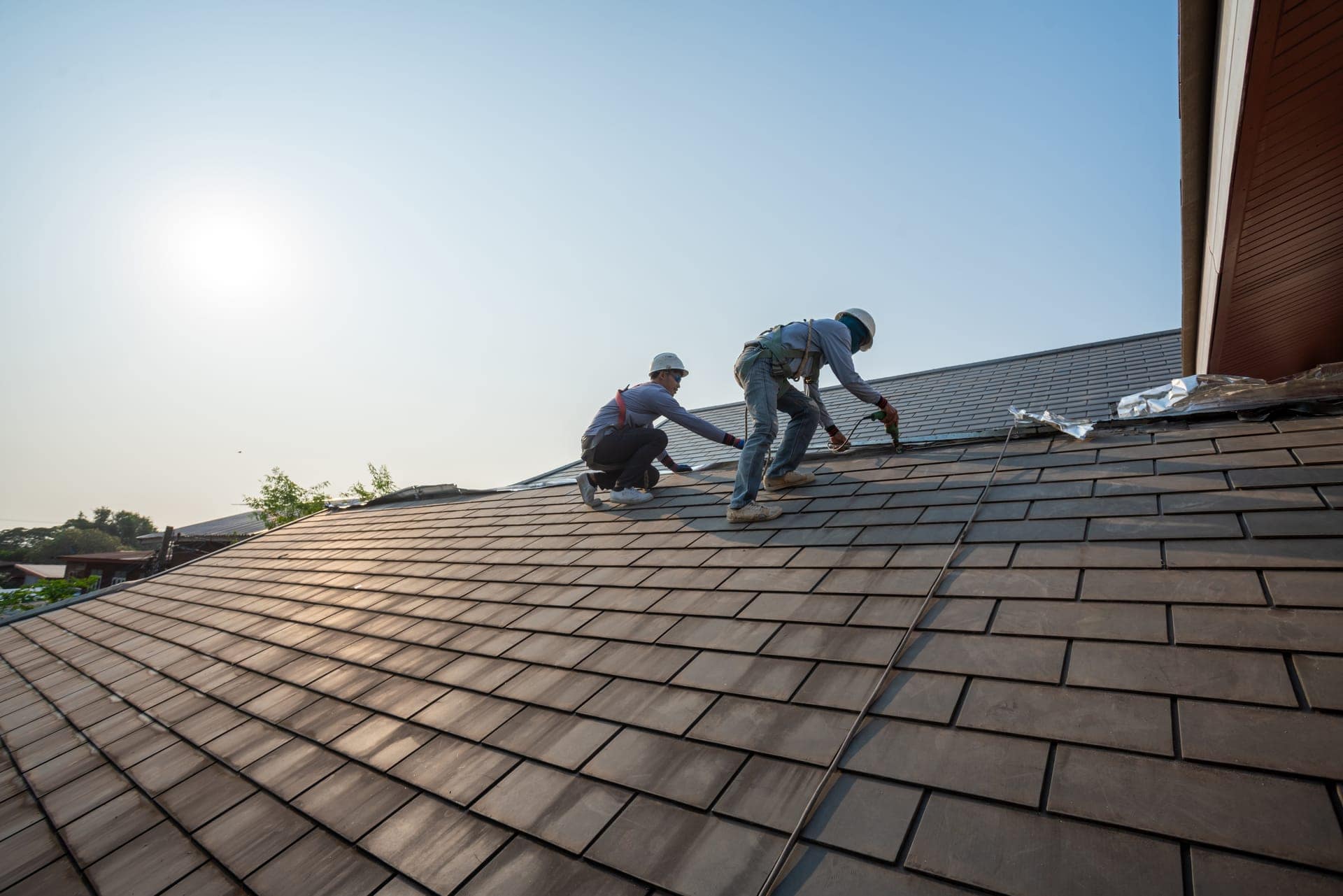
Every year, Milwaukee homeowners spend money on repairs that delay an inevitable replacement, and spend money on replacements that weren't necessary yet. Here's the framework Apexium uses to give homeowners an honest answer.
The Age Rule
Under 10 years old: almost always worth repairing isolated damage.
10–15 years old: evaluate based on scope of damage and remaining life.
15+ years old: replacement math usually wins over repeated repairs.
At 18–20 years, architectural asphalt shingles in Milwaukee's climate have used most of their weather resistance. Repairing one section means the surrounding shingles are still 18 years old, the next hailstorm, ice dam event, or windstorm will produce new damage.
The 30% Rule
If the damage area covers more than 30% of the total roof surface, replacement is almost always more cost-effective than repair, particularly once labor costs for tear-off and mobilization are factored in.
When Repair Is the Right Answer
- Isolated flashing failure on a roof under 15 years old
- Single-point leak at a pipe boot or skylight
- Storm damage limited to one slope on a recently installed roof
- Active leak requiring emergency stop before a planned replacement
When Replacement Is Premature
- Roof under 10 years old with minor storm damage
- Cosmetic granule loss on a 12-year-old roof with no functional damage
- One contractor's diagnosis when you haven't gotten a second opinion
Apexium's Process
We tell you the age, condition, and estimated remaining life of your current roof. We give you the cost of repair and the cost of replacement, with a clear recommendation and the reasoning behind it. If repair is the right call, we'll say so, even if replacement is the bigger job.
Age and spread. Under about 15 years with damage in one area, repair is usually the honest answer. Past 20, or with problems in several places, you are paying twice by repairing. A free inspection should tell you which side of that line you are on.
Sometimes, for a specific failure such as one flashing detail, particularly if you need a few more years. What is not worth it is a series of repairs on a roof that is failing generally, which is how homeowners end up spending half a replacement before replacing anyway.
There is no fixed number, but once you are calling about a different area each season, the field of the roof is telling you something. Two or three targeted repairs on an otherwise sound roof is sensible maintenance. A running tally of patches on a 20-year roof is a replacement paid for in instalments.
You can, and after directional storm damage it sometimes makes sense. Be aware the new work will not match the weathered slopes, and you will be scheduling the rest within a few years.
A useful rule of thumb: if the repair is approaching a quarter of replacement cost on a roof past 18 years, you are usually better off replacing. Below that, or on a younger roof, repair is the honest answer and we will say so.
Not when it is done to specification with matching materials by a competent installer. Improper repairs absolutely can void a manufacturer warranty, which is a reason to keep documentation of what was installed.
Have a specific question about your Milwaukee roof? We answer directly.