
Brown Deer is unusually easy to price compared to most of the metro, and the reason is that the village went up fast. Most of the residential streets were built out in the 1950s and '60s, in runs of ranch homes on similar lots with similar rooflines. We are rarely surprised by a Brown Deer roof.
That uniformity is worth something to you. Here is what we actually charge here and what moves the number.
The Typical Brown Deer Ranch
Most of what we replace in the village is a single-story ranch with somewhere between 1,400 and 2,000 square feet of roof surface, on a shallow pitch, usually in the 3/12 to 5/12 range. For a full tear-off and replacement in architectural asphalt:
- Smaller ranch, roughly 1,400 sq. ft. of roof: $8,000–$11,500
- Typical Brown Deer ranch, 1,600–1,800 sq. ft.: $9,500–$14,000
- Larger ranch or expanded Cape, 2,000+ sq. ft.: $12,500–$18,000
That includes full tear-off of one layer, synthetic underlayment, ice and water shield at the eaves and valleys, new drip edge, pipe boot flashings, ridge cap, and cleanup.
Class 4 impact-resistant shingles add roughly $1,800–$2,800. In Brown Deer we recommend them more often than we do elsewhere in the metro, for reasons covered below.
How the Low Pitch Cuts Both Ways
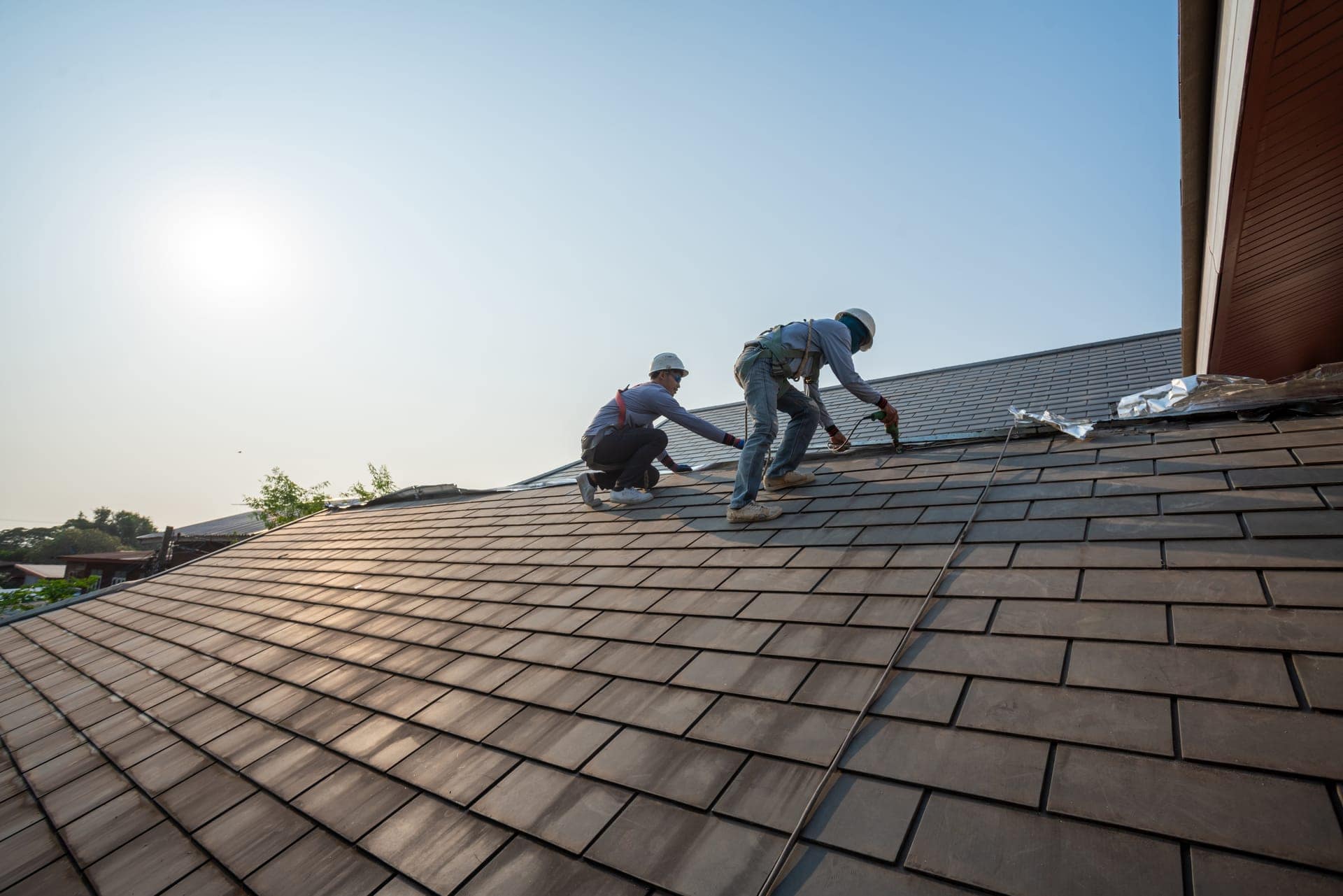
A 3/12 or 4/12 roof is walkable. Crews move faster on it, staging is simpler, and there is no roof jack setup or harness slowdown the way there is on a steep Wauwatosa Colonial. On labor alone, a Brown Deer ranch is a cheaper roof to install than the same square footage at 9/12.
Then the pitch takes some of that back.
Low slope means water moves off the roof slowly and sits on the surface longer. Manufacturers require a doubled underlayment application below 4/12, and most architectural shingles are not warranted at all below 2/12. Slow drainage also means ice backs up further under the shingles when a dam forms at the eave, which is why our ice and water shield coverage in Brown Deer is not the code minimum.
Wisconsin code requires ice barrier from the eave edge to 24 inches inside the exterior wall line. On a shallow-pitch ranch, 24 inches inside the wall can still be inside the zone where ice backs water up. We run ice barrier well past that on Brown Deer jobs, and on the shallowest roofs we will run it over the entire deck. Ask any contractor quoting your roof how far up the ice barrier goes and whether the number changes with the pitch. If the answer is "code minimum" on a 3/12, keep calling.
What Should Be a Separate Line
- Deck replacement: $70–$115 per sheet. On 60 to 70 year old houses this comes up. The original decking on a lot of Brown Deer ranches is board sheathing rather than plywood, and boards with gaps between them do not hold fasteners the way modern sheathing does. Sometimes the right answer is overlaying with new sheathing, which adds cost and should be quoted, not sprung on you.
- Second-layer tear-off: $1,400–$2,400. Plenty of houses here are on their second roof already.
- Ventilation work: if the attic is under-ventilated, which on these low-volume attics it very often is, adding intake at the soffit and exhaust at the ridge runs $800–$2,200 depending on what is there now.
- Chimney flashing: $350–$750.
- Village permit: pulled by us, listed on the quote.
Why Impact-Resistant Shingles Make More Sense Here
Brown Deer sits in a corridor north of Milwaukee that takes hail more often than the average Wisconsin community. We have worked multiple neighborhood-wide hail events in the village. If your street had a claim event in the last several years, you likely remember the parade of roofing signs.
Class 4 shingles cost more up front and qualify for homeowner insurance discounts in Wisconsin, typically in the 10–20 percent range on the roof portion of the premium. On a house in a hail corridor that you plan to keep, that math usually works out inside five or six years, and you are less likely to be filing again.
If Your Neighbors Are Getting New Roofs
That is worth paying attention to. Hail damage is not always visible from the ground, and it is common for a whole block to qualify while only the homeowners who had someone look are the ones who file. Insurance in Wisconsin covers sudden hail and wind damage. It does not cover age and wear, and the window for filing after an event is limited.
We inspect and document for free, and we will tell you honestly if what we find is wear rather than storm damage. That answer does not earn us a claim job, but it is the right answer and it is the reason people call us back.
Getting Your Number
We measure the roof, check the deck condition where we can see it, look at the attic ventilation, and put the sheathing rate in writing before we start. Because the housing stock here is so consistent, our Brown Deer quotes tend to hold. We are eight minutes from most of the village, which means we can usually look at it the same day or the next.
Have a specific question about your Milwaukee roof? We answer directly.