
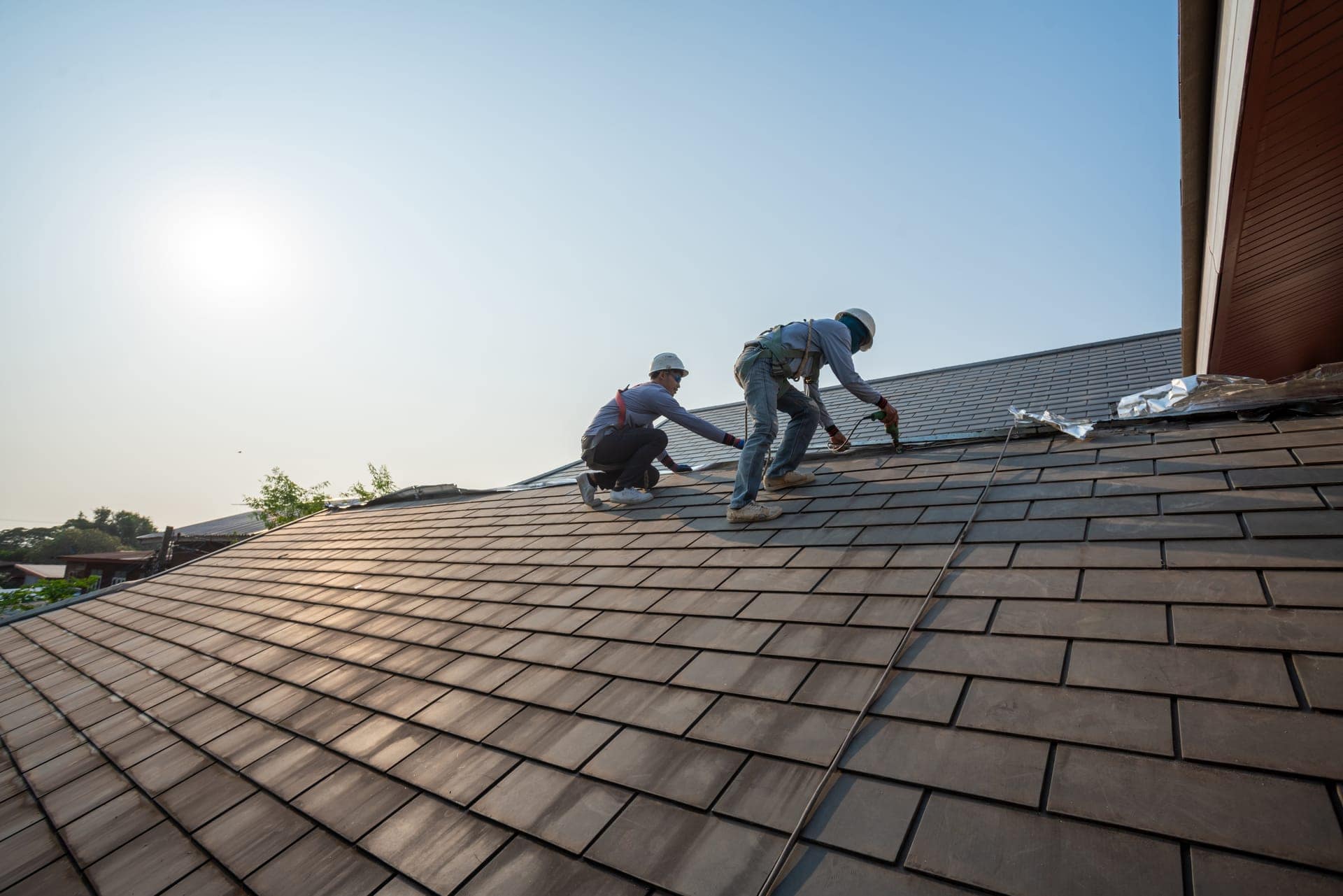
Almost every siding quote we write in Milwaukee County comes down to two materials: vinyl or fiber cement. People treat them as interchangeable options at different price points. They are not. One goes up in a week and never needs paint. The other costs roughly double, weighs eight times as much, and changes how the house reads from the street.
Here is how we actually talk homeowners through the decision.
Vinyl: Still the Default, and Usually Defensible
Vinyl goes on something like seven out of ten siding jobs we do. A full wrap on an 1,800 sq. ft. two-story runs $9,000–$16,000 installed, depending on profile, trim complexity, and how much rotted sheathing turns up once the old siding is off.
The case for it is simple. It does not rot, it does not absorb water, and it never needs paint. In a climate that puts 30-plus freeze-thaw cycles a year through every exterior surface, "does not absorb water" is worth more than it sounds.
The catch is cold. Vinyl stiffens and turns brittle somewhere around 20 degrees, and Milwaukee spends a good part of January below that. A hailstone or a stray baseball that would leave a dent in warm weather will crack a panel in February. We replace more cracked vinyl in late winter than in the rest of the year combined.
Insulated vinyl adds roughly $1.50–$3.00 per square foot. It does two useful things: the foam backing stiffens the panel so it survives impact better, and it breaks the thermal bridge at the studs. On an older Milwaukee house with 2x4 walls and thin cavity insulation, that is a real comfort difference, not a brochure claim. If you are going vinyl on a pre-1960 house, we usually push for the insulated product.
Fiber Cement: The Long Answer
Fiber cement, which most people call HardiePlank after the James Hardie brand, runs $16,000–$28,000 on that same 1,800 sq. ft. two-story. That is a serious jump and it deserves a serious reason.
It is cement, sand, and cellulose fiber. It does not crack in cold. Hail does not faze it. It holds paint for 12–15 years instead of the 5–7 you get on wood. It carries a Class A fire rating, which matters on the tight lots in Riverwest and the older near-north neighborhoods where houses sit eight feet apart. And it looks like painted wood, because it has real thickness and a real shadow line. Vinyl, however good it has gotten, still reads as vinyl up close.
Lifespan is where the math turns. We expect 40-plus years out of properly installed fiber cement in Wisconsin. Vinyl on a Milwaukee exposure realistically gives you 20–30 before fading and brittleness catch up with it, and the south and west elevations always go first.
The downsides are real. It is heavy, so installation costs more in labor. It needs to be repainted eventually, which vinyl does not. And it is unforgiving of bad installation in a specific way: cut edges have to be sealed and the required clearances have to be respected. Six inches to grade, two inches above roof surfaces, a quarter inch at horizontal flashing. Installers who treat it like wood siding cause problems that show up in year four.
The Cold-Climate Detail Nobody Quotes
Neither material keeps water out on its own. Both are rain screens. Water gets behind siding in every Wisconsin storm, and what saves the wall is the drainage plane underneath: house wrap, correctly lapped, integrated with the window and door flashing.
This is where most of the siding failures we open up actually started. Not the panels. The wrap behind them, or the flashing at a window head, or a kickout that was never installed where a roof edge dies into a wall. We have pulled sound-looking vinyl off walls where the sheathing behind it was black and soft, because water had been running behind it for six years through a two-inch gap nobody flashed.
Ask any siding contractor what house wrap they use, how they lap it at windows, and whether kickout flashing is in the quote. If the answer is vague, keep calling.
Which One, Honestly
Pick vinyl if you are staying under about ten years, the budget is the constraint, or the house is a straightforward rectangle without much trim detail. Insulated vinyl if the house is old and drafty.
Pick fiber cement if you are staying long term, the house has architectural character worth honoring, you are on a tight urban lot where fire rating matters, or you have been through one hail claim already and do not want another.
The one combination we push back on: cheap uninsulated vinyl on a high-exposure elevation facing west or southwest. That is the wall that fades first, cracks first, and looks tired in eight years. If the budget is tight, we would rather do insulated vinyl on the exposed elevations and standard on the sheltered ones than do the cheapest product everywhere.
Get It Priced Against Your Actual House
When we quote siding installation in Milwaukee, square footage is only part of the number. Trim complexity, the number of windows, whether soffit and fascia need replacing, and how much sheathing is rotted all move it. We quote siding in writing with the sheathing repair rate listed up front, so a bad surprise behind the old siding does not become a bad surprise on the invoice.
Both work, for different reasons. Vinyl never needs paint and does not absorb water, which matters across 30-plus freeze-thaw cycles a year, but it turns brittle below about 20 degrees and cracks on impact. Fiber cement does not crack in cold and lasts 40-plus years, at roughly double the cost.
Yes, and it is the main reason we replace panels in February and March rather than evenly through the year. A hailstone or a stray ball that would dent warm siding will crack a cold panel. Insulated vinyl resists it noticeably better because the foam backing stiffens the panel.
On an older Milwaukee house with 2x4 walls and thin cavity insulation, usually yes. It adds roughly $1.50 to $3.00 per square foot and does two useful things: stiffens the panel against impact and breaks the thermal bridge at the studs. On a well-insulated newer home the case is weaker.
Forty-plus years in Wisconsin when installed correctly, against 20 to 30 for vinyl on an exposed elevation. It holds paint 12 to 15 years rather than the 5 to 7 you get on wood, and it carries a Class A fire rating, which matters on tight urban lots.
Clearances, mostly. It is unforgiving in a specific way: cut edges must be sealed and the required gaps respected, six inches to grade, two inches above roof surfaces, a quarter inch at horizontal flashing. Installers who treat it like wood siding cause problems that surface in year four.
We do not recommend it. You cannot inspect the sheathing or the house wrap you never uncovered, and most of the wall rot we find started behind sound-looking siding. Going over the top hides exactly the thing that needs checking.
Have a specific question about your Milwaukee roof? We answer directly.